


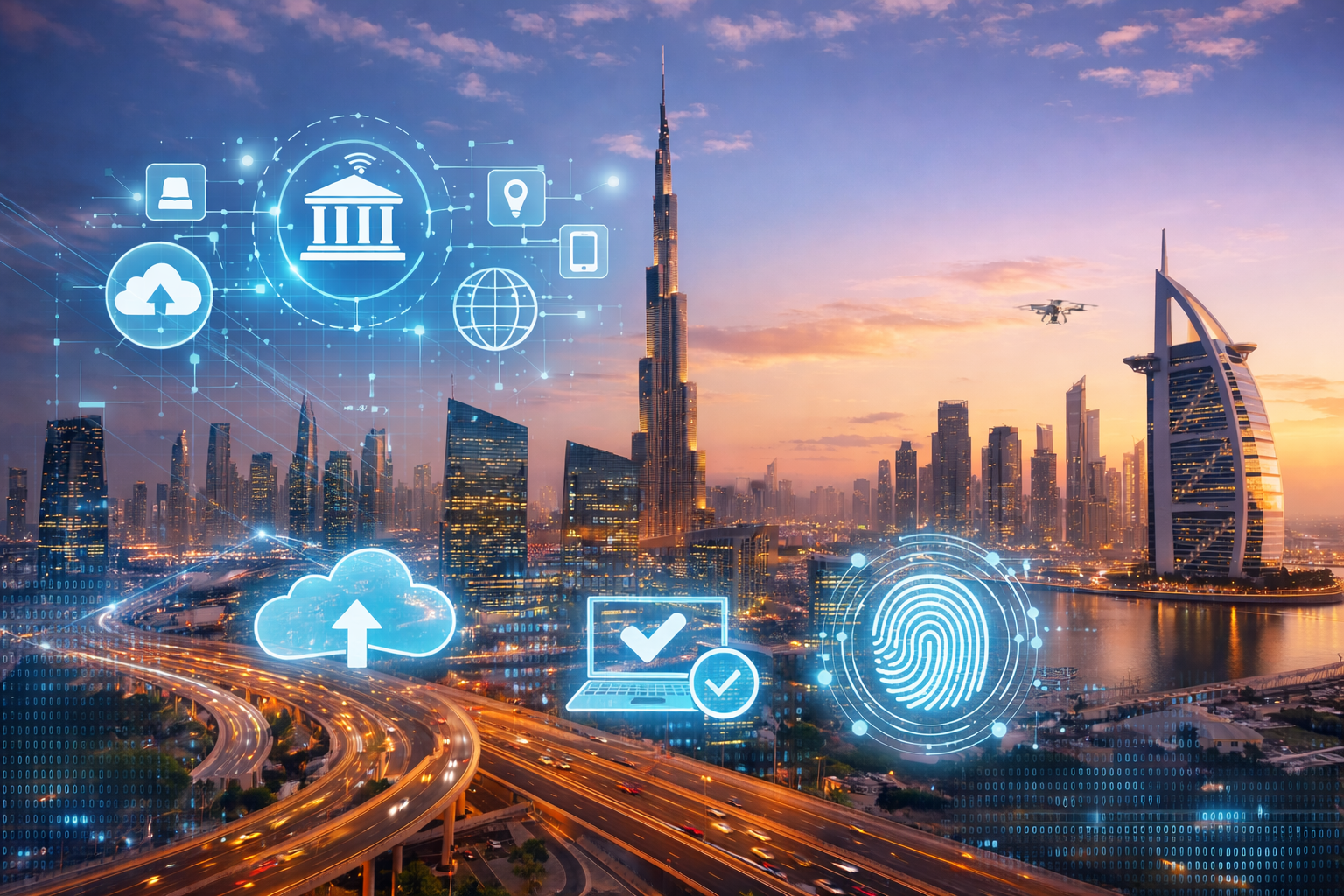
The United Nations E-Government Survey 2024 affirms that investment in digital governance has become a foundational pillar in the strategies of ambitious cities seeking to enhance user experience and elevate service quality. The Organisation for Economic Co-operation and Development (OECD) similarly notes that digital transformation in cities is no longer merely a technological option, but has become an essential driver in reshaping urban lifestyles and strengthening the interconnection between governments, communities, and the private sector.
In this global race towards digital leadership, Dubai stands out as an inspiring model for the intelligent application of technology to develop integrated digital experiences that accelerate responsiveness to needs and stimulate sustainable economic growth.
Dubai has successfully embodied this direction through a comprehensive digital vision that harnesses advanced technologies to elevate quality of life and build a resilient and thriving digital economy.
Ambitious initiatives in the fields of artificial intelligence, digital supply chains, and next-generation mobility solutions form a central pillar of Dubai's digital journey, reflecting the emirate's commitment to leveraging technology for tangible positive impact and building a digital infrastructure that is both resilient and future-ready.
Key Initiatives in the Digital Life
Dubai does not merely adopt artificial intelligence; it leads it with an ethical and strategic perspective. Through a comprehensive artificial intelligence policy, the emirate has established advanced governance frameworks that ensure the responsible and safe use of this technology across various sectors, placing the balance between innovation, safety, and trust at the heart of its vision.
For more than a decade, the Dubai Data and Statistics Establishment has been engaged in collecting, classifying, and structuring city-level data to ensure its readiness for use in artificial intelligence models.
Dubai Digital also collaborates with global technology leaders to ensure the availability of world-class artificial intelligence infrastructure. In support of this direction, Dubai Digital works alongside the Dubai Centre for Artificial Intelligence (DCAI) to identify high-potential use cases, which has resulted in the publication of the "State of AI in Dubai Report" as a strategic reference document.
In April 2024, His Highness Sheikh Hamdan bin Mohammed bin Rashid Al Maktoum, Crown Prince of Dubai, Deputy Prime Minister, Minister of Defence, and Chairman of the Dubai Executive Council, launched the "Dubai Comprehensive Artificial Intelligence Roadmap," with the aim of cementing Dubai's position as the world's fastest-evolving, most resilient, and most future-ready city.
This annual plan embodies Sheikh Hamdan's vision of harnessing the potential of artificial intelligence to elevate quality of life, accelerate AI adoption across vital sectors, and contribute to the objectives of the Dubai Economic Agenda D33 by adding AED 100 billion annually to Dubai's economy and increasing productivity by 50% through innovative solutions.
Building on this pioneering vision, Sheikh Hamdan has taken concrete steps to advance this agenda, most notably the appointment of 22 Chief Artificial Intelligence Officers across government entities in 2024, alongside the launch of artificial intelligence and Web3 incubators such as the Dubai AI Campus at the Dubai International Financial Centre for Innovation. He also directed the organisation of an "AI Week" within educational institutions to embed digital literacy among future generations.
Mobility and Urban Innovation
In the field of mobility, Dubai is at the forefront of integrating advanced technologies, having become synonymous with future-oriented, efficient, and sustainable transportation solutions. This is reflected across several landmark projects, ranging from the world's first driverless metro system to the development of air taxis and hyperloop high-speed transit systems.
The Dubai Urban Master Plan 2040 underscores the importance of reducing traffic congestion, limiting carbon emissions, and integrating smart technology into public infrastructure.
By combining ambitious urban planning with cutting-edge innovation, Dubai is redefining the movement of people and goods both within and beyond its borders.
The Digital Economy and Global Leadership
Dubai is advancing steadily towards establishing itself as a global digital capital. The launch of the Dubai Cashless Strategy has reinforced the emirate's position as a hub for secure, inclusive, and convenient digital payments.
Dubai is not only leading change domestically but is also opening avenues for international collaboration through strategic partnerships with the United Nations and leading global cities to advance the Global Initiative on Virtual Worlds and Artificial Intelligence, with the aim of developing future frameworks for virtual reality technologies and digital governance.
Adding further strength to its innovation ecosystem, the United Arab Emirates ranked first in the Arab world and within the top ten globally in the IMD World Talent Ranking in 2025, making Dubai an increasingly attractive destination for entrepreneurs, innovators, and digital talent from around the world.
Key Lessons for Cities Pursuing Digital Governance
Through its pioneering experience in digital transformation, Dubai offers an inspiring model for cities worldwide. Several foundational principles can be drawn from this experience for any government seeking to adopt digital governance:
Future-Oriented Vision: Successful governments are not driven by reactive measures; they are built on forward-looking perspectives and anticipate future requirements. This is what distinguishes Dubai's policies in the areas of digitalisation, transportation, and infrastructure.
Integration and Inclusiveness: Genuine digital transformation is only achieved through the integration of efforts across government and private entities under a unified vision. Coordinated collaboration between the public and private sectors ensures efficiency and drives innovation.
Data Governance: In the age of data, clear and comprehensive governance frameworks are essential to regulate data sharing, safeguard security, and enhance public trust. As technologies evolve, flexible regulatory frameworks help strike the right balance between innovation, compliance, and safety.
Quality of Life Enhancement: No digital strategy is complete without a focus on its direct impact on people's lives. Digital initiatives must prioritise accessibility, usability, and contribution to future solutions such as autonomous vehicles, drones, seamless mobility, sustainability, and enhanced connectivity.
Future Aspirations
Having successfully digitalised the majority of its government services, Dubai is now focused on establishing integrated digital experiences that bridge the public and private sectors, ensuring a seamless user journey free of barriers and complexities.
The city is advancing towards the deployment of interactive artificial intelligence solutions that function as personal assistants, enabling the completion of services within seconds, without the need to repeat steps or navigate across multiple platforms. Ongoing collaboration between the public and private sectors remains the cornerstone of Dubai's digital strategy and a primary driver in achieving the desired transformation towards more agile and intelligent experiences.
As digital transformations accelerate across cities worldwide, Dubai emerges as a global case study that inspires other governments. By focusing on governance, emerging technologies, and community engagement, governments can build public services that are more resilient, transparent, and efficient.